What We Do
How We Plant
From Planning to Planting
We pride ourselves on building strong relationships with neighborhood leaders and community stakeholders, and engaging residents through every step of our planting process.
Our Process
Locations Identified
Once potential tree locations are identified, the outreach process starts.
Mailers Sent
Each home adjacent to a tree point receives information about tree planting opportunities.
Community Meetings Attended
Attend meetings to share more about the organization and the work we do.
Canvassing
Go door to door and connect with residents, leaving behind materials if they are not home.
Planting Implementation
After the outreach process concludes, planting begins a few weeks later.
Locations Identified
Once potential tree locations are identified, the outreach process starts.
Mailers Sent
Each home adjacent to a tree point receives information about tree planting opportunities.
Community Meetings Attended
Attend meetings to share more about the organization and the work we do.
Canvassing
Go door to door and connect with residents, leaving behind materials if they are not home.
Planting Implementation
After the outreach process concludes, planting begins a few weeks later.
Site Assessment
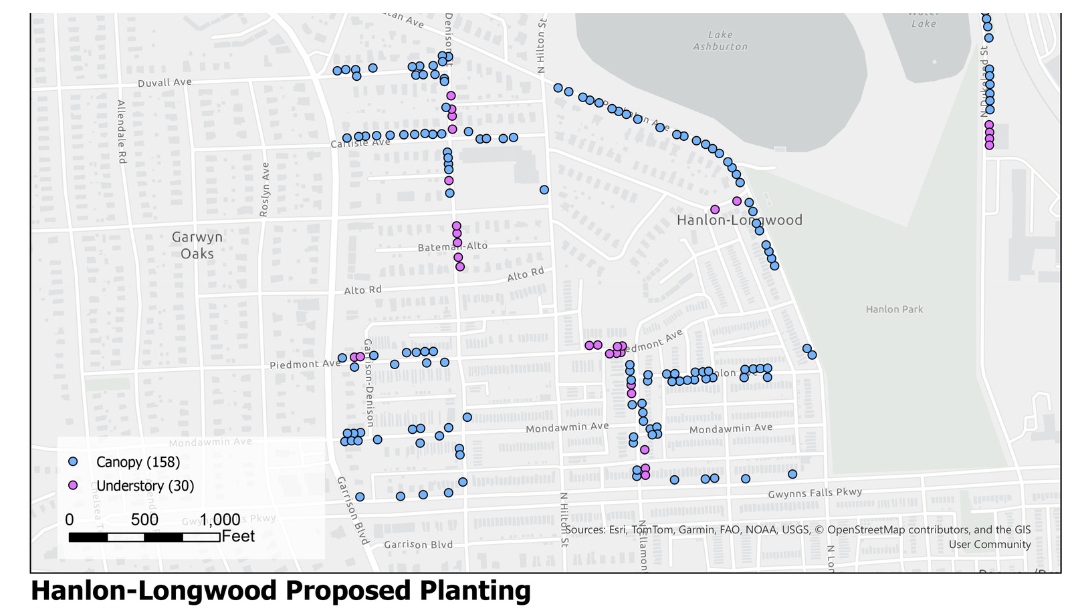
Once we identify target neighborhoods, our site assessors identify locations where trees can be planted as well as locations that can be transformed into new plantable sites through stump grinding or concrete removal.
Outreach
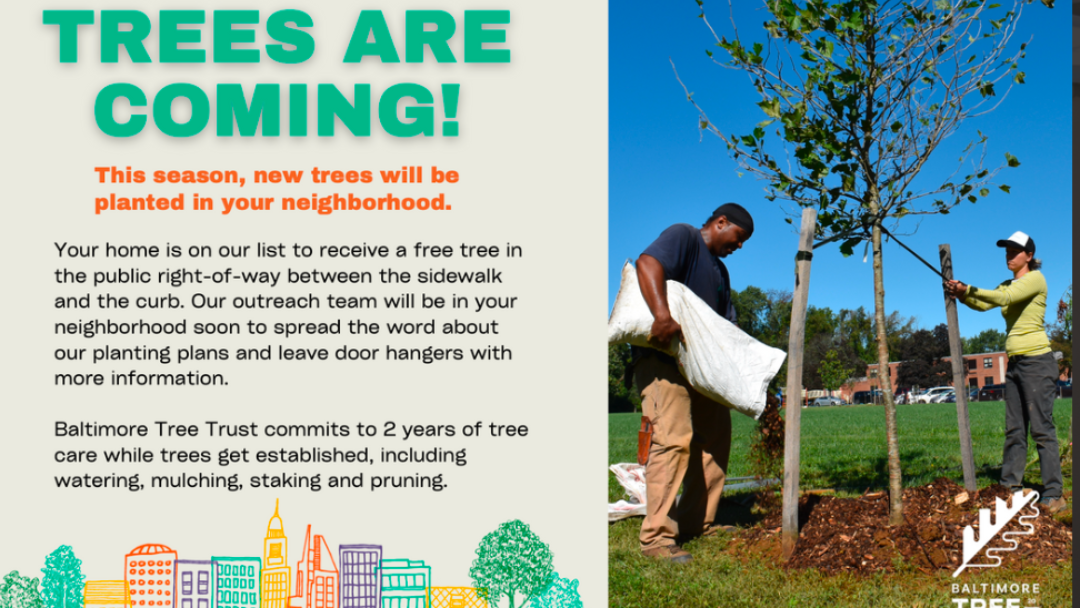
Our outreach process begins once potential tree planting locations are identified. We initiate contact by sending direct mailers to homes adjacent to these tree points, providing residents with an opportunity to learn more about our work. We then seek opportunities to present at community meetings or table at local events. Finally, before any trees are planted, our outreach team conducts neighborhood canvassing of the area. Throughout this entire process, residents always have the option to decline a tree planting.
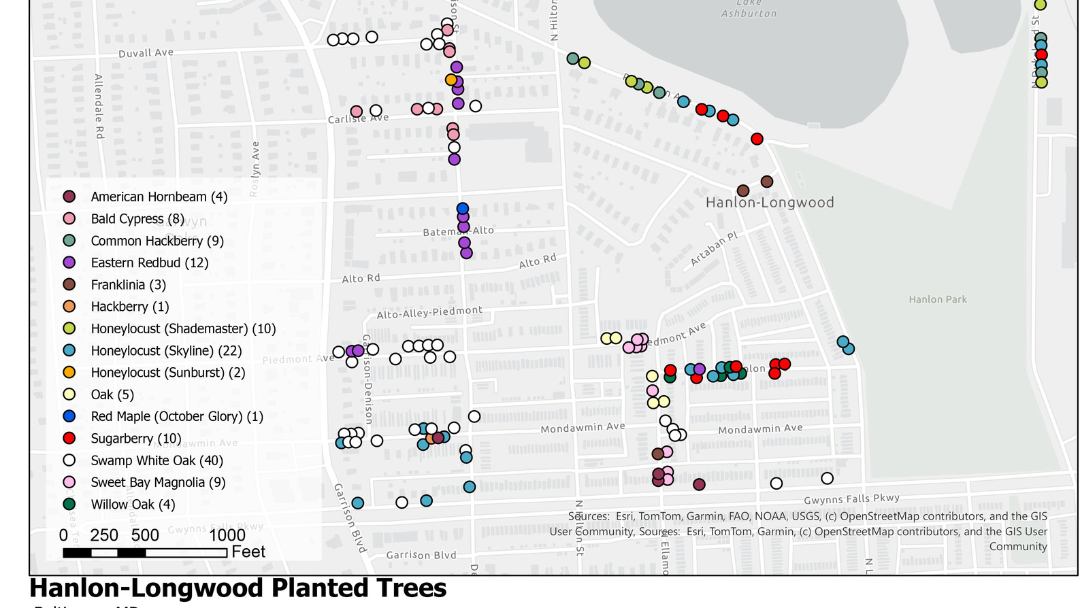
Planting
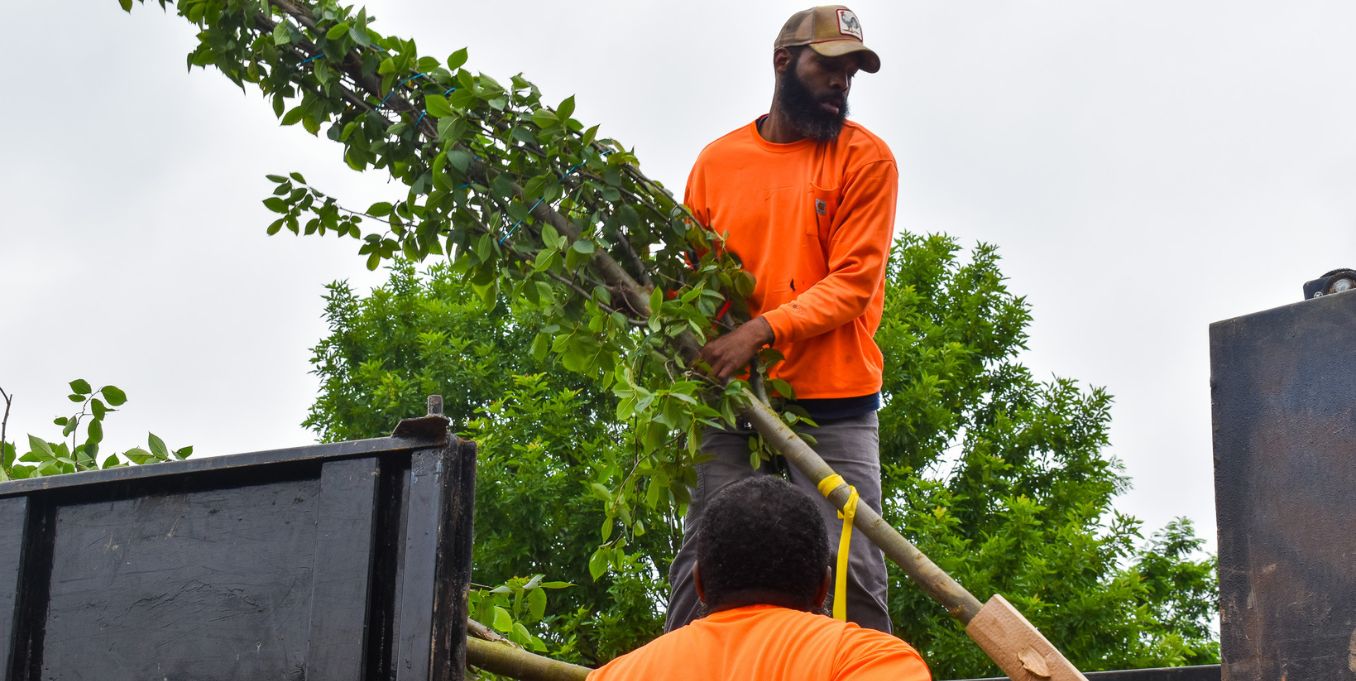
Two to three weeks after canvassing, trees are planted. Our dedicated NFT’s skillfully plant trees across the neighborhood, taking care to acknowledge all received tree declines or community notes.
Bring Trees To Your Neighborhood
Does your neighborhood need more trees? Baltimore Tree Trust works with communities across the city to identify planting opportunities and bring new canopy to blocks that need it most. Whether it’s your street, a local park, or vacant tree wells in your area, we want to hear from you.
Let us know where Baltimore needs more trees.
Where are we headed next?
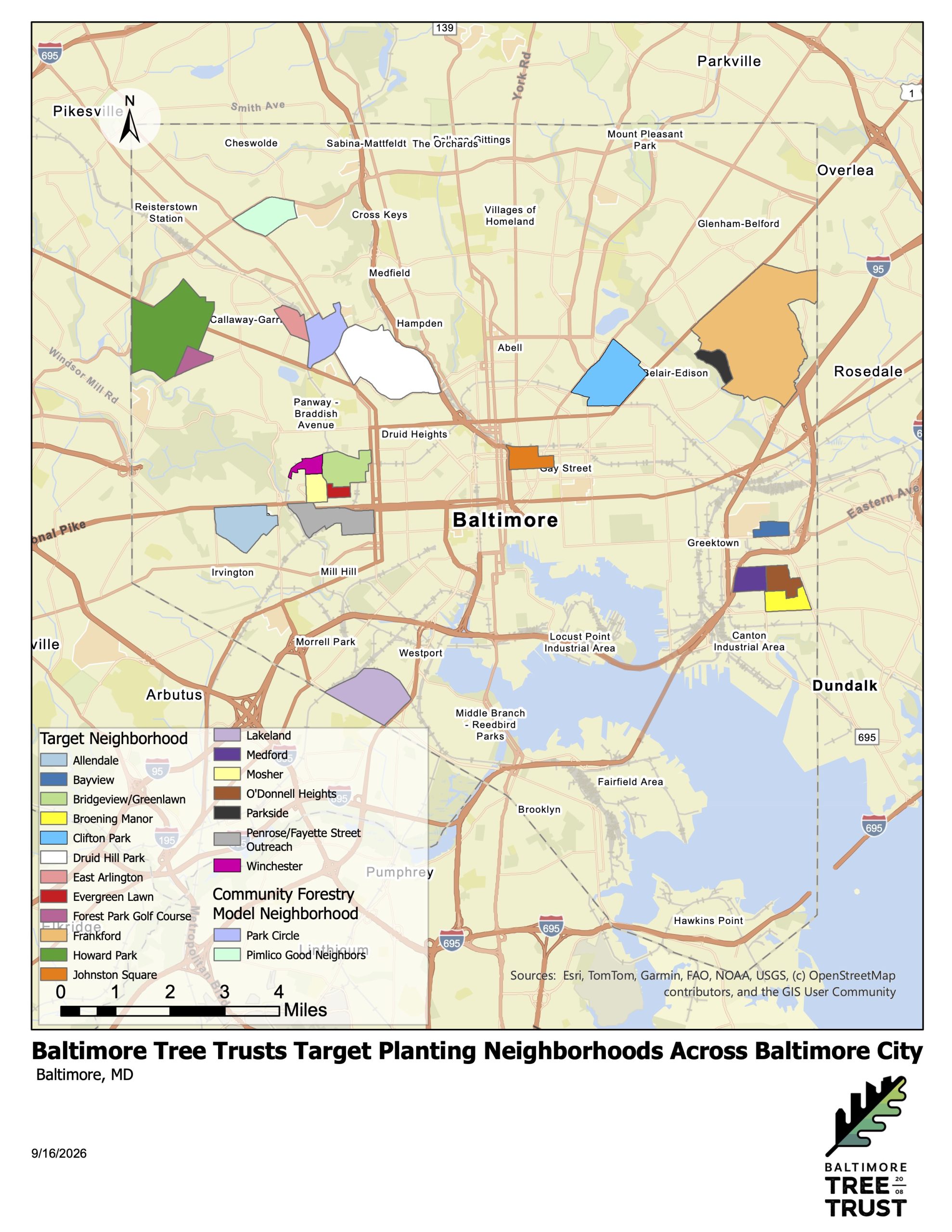
For the Fall 2026 planting season, we intend to plant trees in the following communities:
Neighborhoods: Mosher, Allendale, Bayview, Bridgeview / Greenlawn, Broening Manor, E. Arlington, Evergreen Lawn, Frankford, Johnston Sq., Lakeland, Medford, O’Donnell Heights, Parkside, and Penrose/Fayette Street Outreach.
Introduction of the Community Forestry Model: Park Circle and Pimlico Terrace
With additional community-based planting at Baltimore City Golf Courses and the Maryland Zoo!
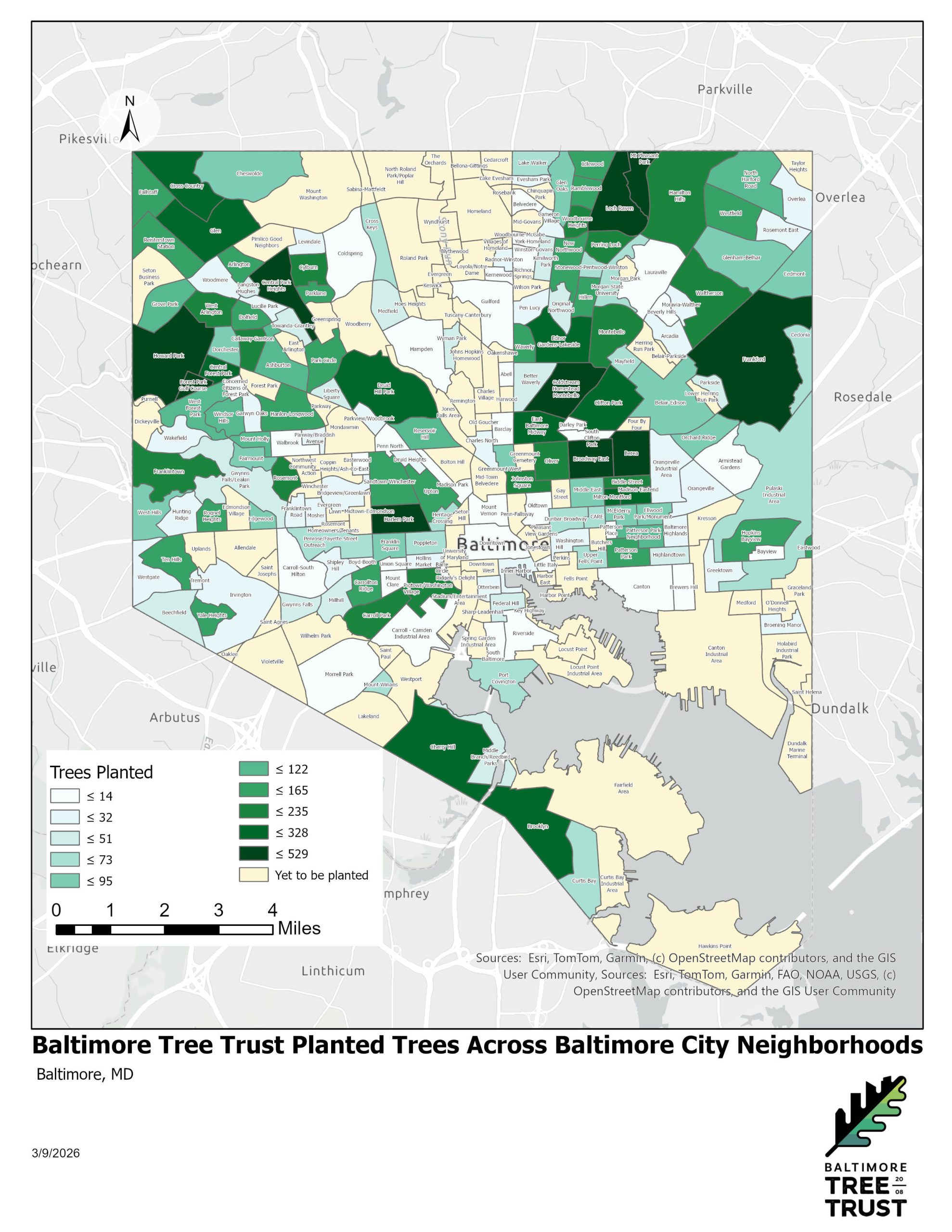
Where have we planted?