
Baltimore Tree Trust has collaborated with the Smithsonian Environmental Research Center to investigate urban tree mortality rates in Baltimore City. Through our collaboration, we are working to identify tree species that can withstand our changing climate and continue providing communities the benefits of trees now and in the future.
To begin, we must address the impacts of redlining, which has worsened the Urban Heat Island (UHI) effect. Some Baltimore City residents are feeling the impact of rising heat more harshly than others. Formerly redlined neighborhoods often have more impervious surfaces and less green space or tree canopy. This increases temperatures because the impervious surfaces, like concrete or asphalt, trap heat and release it back into the air. Trees combat UHI by cooling the surrounding area by up to 12 degrees. The increased heat from the Urban Heat Island effect can lead to heat-related sickness, worse air quality, higher energy bills, and more.
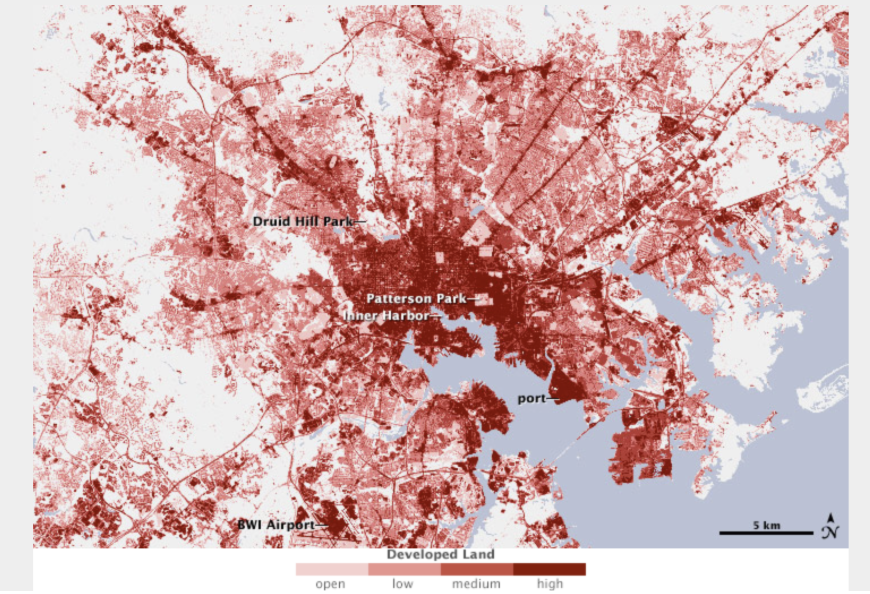
Baltimore Tree Trust is actively addressing the tree disparity in Baltimore City neighborhoods. We have partnered with TreeBaltimore to bring Baltimore City’s tree canopy to 40%, especially in historically neglected areas. BTT maintains and monitors tree health and replaces dead or declining trees up to two years post-planting. We have planted over 23,000 trees since 2008 in 199 neighborhoods and created over 1,000 plantable sites. We prioritize planting native trees to replenish Baltimore City’s tree diversity, choosing drought-resistant species to aid survival. Planting a tree is just the beginning; ensuring our trees survive and become part of Baltimore City’s tree canopy takes all of us.
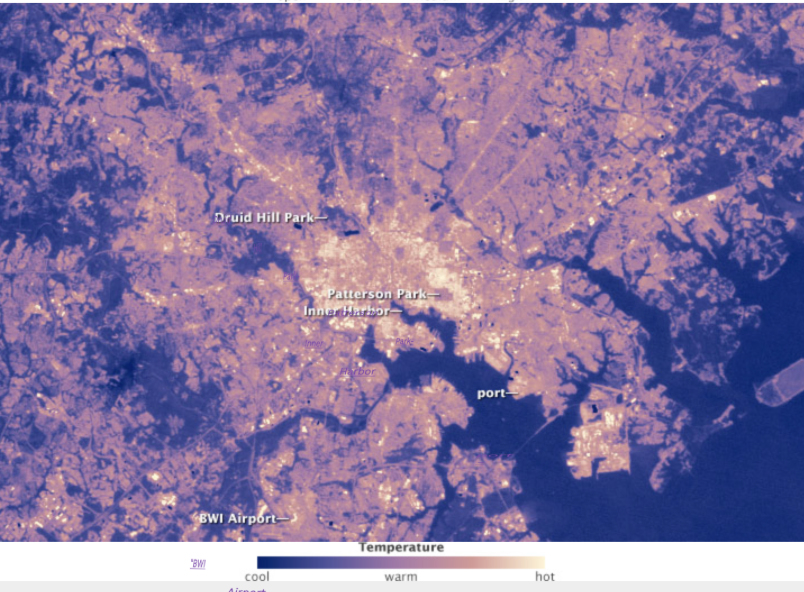
What the data shows
The Smithsonian Environmental Research Center (SERC) analyzed our tree maintenance dataset across our 2-year warranty period to determine survival rates by species and location. They found survival rates varying drastically from species to species. Communities aren’t the only ones impacted by UHI; trees planted also suffer from concentrated heat. SERC found that species like honey locust (Gleditsia triancanthos) and green hawthorn (Crataegus viridis) have high survival rates, but their survival is being negatively impacted by extreme heat within the city.
SERC’s research provides interactive models to better understand how location affects survival rates between different species. Their models found that land surface temperature is a vital predictor of a tree’s survival, comparing American sycamore to swamp white oak plantings across the city. Swamp white oak was found to be more sensitive to variation in land surface temperature than American sycamores. Their models include spatial factors such as land surface temperature, land use, drought, soil type, and more.
SERC’s data will help us restore Baltimore City’s tree canopy by ensuring we plant native, drought-tolerant species with higher survival rates. If you are curious about how SERC’s research will help us make more informed planting choices, you can read their story map.
Join Us!
If you would like to support our planting efforts, you can:
- Sign up today to volunteer to plant with us!
- Donate to help our planting efforts
- Plant a tree in your yard!